
 CBD Softgels
 CBD Gummies
 CBD Cream
99% CBD isolate is nearly pure cannabidiol with other plant compounds removed, and the safest way to trust “THC-free” is to confirm it on your product’s batch COA from an ISO-accredited lab.
You see 99% CBD isolate and your brain goes, “Okay… so is this truly THC-free?” And then you wonder, “What’s in the other 1%?” We get it. We’ll give you the clear answer first, then show you exactly how to verify it for your own product using the Certificate of Analysis (COA).
What is 99% CBD isolate?
A 99% CBD isolate is a nearly pure CBD ingredient. “99%” describes the purity of the isolate itself, and you confirm what’s actually in your product by checking the batch COA.
That last part matters: “99%” is a purity standard for the ingredient. It is not a shortcut for skipping proof. The proof is the batch COA, because it shows what a lab found in that specific batch.
What does the other 1% mean?
The “other 1%” is usually tiny residuals like trace moisture or harmless leftover plant material that labs can measure at very small levels.
Think of it like this: refinement can get extremely close to “pure,” but nothing in real-world manufacturing is a magical 100. That’s why your Certificate of Analysis (COA) is the key document. It tells you what’s present and what’s non-detect (meaning the lab didn’t detect it within its testing limits).
How is CBD isolate made?
CBD isolate is made by extracting hemp compounds, then repeatedly refining the extract until CBD is separated into a near-pure form.
You don’t need the deep chemistry to understand the point: each step removes “extra stuff,” so the CBD becomes cleaner and more consistent.
The refinement steps
These steps are used to remove waxes, fats, pigments, and other cannabinoids so the final material can reach 99% CBD isolate purity.
|
Step |
What it does (simple) |
Why it matters for purity |
|
Extraction |
Pulls compounds out of hemp |
Creates the starting extract |
|
Winterization |
Removes plant waxes/fats |
Makes the extract cleaner and smoother |
|
Decarboxylation |
Activates CBD into its usable form |
Helps maintain consistency in finished products |
|
Distillation |
Separates compounds by boiling points |
Boosts CBD concentration |
|
Chromatography |
Separates CBD from THC and others |
Used when very strict THC removal is needed |
|
Crystallization |
CBD forms crystals/powder |
Produces the “isolate” form |
Is 99% CBD isolate THC-free?
CBD isolate is intended to remove THC, and the only reliable way to confirm “THC-free” is to see THC listed as non-detect on the batch COA. Here’s the important detail: labels are marketing. The Certificate of Analysis (COA) is evidence.
“ND” vs “0.0.”
“ND” means the lab did not detect THC at or above its limit of detection; “0.0” can look cleaner, but it often depends on how results are displayed.
So, if you’re checking for THC, look for THC results that say non-detect (or “ND”) for that batch, from an ISO-accredited lab.
If you’re worried about drug tests, here’s the decision
Choose CBD isolate if THC avoidance is your top priority, and still verify the batch COA before you use a product.
People who get tested, professionals, athletes, and first responders often prefer CBD isolate for this reason. Yes, they are made with 99% pure CBD Isolate and contain no THC. This makes them an ideal choice for customers who need to avoid THC for personal or professional reasons, although we cannot guarantee that you will pass a drug test after consuming this product.
CBD isolate vs full spectrum vs broad spectrum

The difference is simple: CBD isolate is CBD-only, full spectrum includes other cannabinoids plus THC (<0.3%), and broad spectrum keeps other cannabinoids while removing detectable THC.*
- CBD isolate: CBD-only, no entourage effect.
- Broad spectrum: other cannabinoids + terpenes, THC removed to non-detect.
- Full spectrum: whole-plant profile, includes THC under the legal limit.
Which one should you choose?
Choose CBD isolate if you want THC avoidance, consistent dosing, and a neutral flavor in edibles.
- You want THC avoidance (and you still want proof via batch COA)
- You want consistent dosing (same mg, batch after batch)
- You prefer a neutral flavor profile (less “hempy” taste)
How to verify “purity” the right way
A batch COA is the lab report for a specific product batch, and it’s the best way to confirm the CBD amount and THC status. When you’re checking purity, don’t just look for one number. Look at the cannabinoid profile and the safety panels.
What to look for on a CBD isolate COA
A strong Certificate of Analysis (COA) shows cannabinoid results plus safety testing for common contaminants.
Check these sections:
- Cannabinoid profile: confirms CBD amount and THC as non-detectable
- Heavy metals: shows results for metals testing
- Pesticides: confirms pesticide screening
- Microbial: checks for microbes
- Residual solvents: confirms no leftover processing solvents
Why ISO-accredited testing matters
An ISO-accredited lab follows strict testing standards, which makes the COA more trustworthy.
You don’t have to memorize the standard. Just know this: ISO accreditation is a credibility signal that the lab runs controlled, validated testing methods.
Why do we use CBD isolate in specific products?
We use CBD isolate in products made for people who want THC avoidance without extra hemp compounds.
This is a design choice. Different spectrums fit different needs, and isolate fits the “keep it simple” preference.
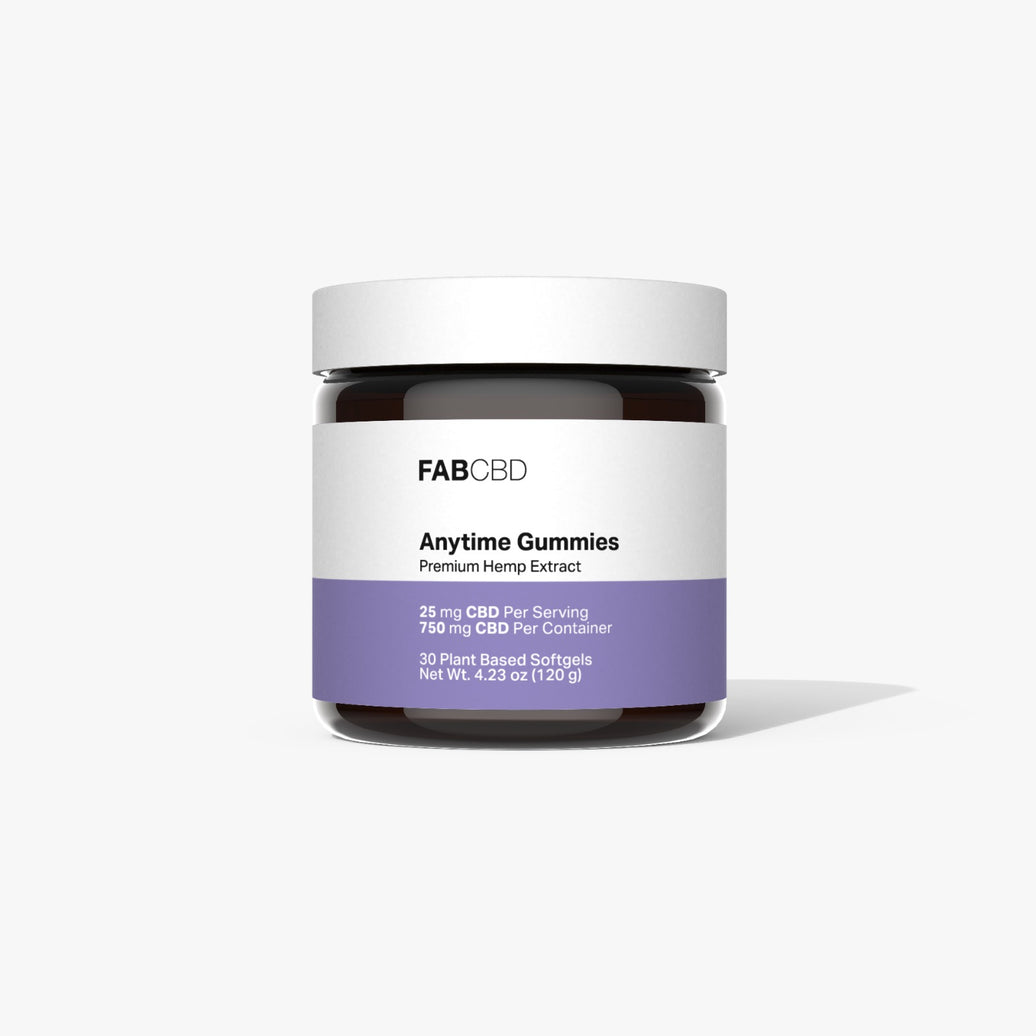
Example: our Anytime Gummies
Our Anytime Gummies use 99% CBD isolate for a consistent, THC-free format with a clean taste. Each gummy is built for straightforward use and consistent labeling. They’re also made to match common dietary preferences, including vegan, non-GMO, and gluten-free options.
Storage + shelf life basics
Store CBD isolate products in a cool, dry place away from heat and direct light.
Basic rule: heat and sunlight are not your friends here. Keep the lid closed, keep it away from humidity, and you’ll keep the product closer to its labeled strength over time.
FAQs
What does 99% CBD isolate mean?
99% CBD isolate means the ingredient is nearly pure CBD, with most other hemp compounds removed, and the remaining details are confirmed on the batch COA.
Is CBD isolate the same as “THC-free”?
CBD isolate is intended to be THC-free, and you confirm it by checking THC as non-detect on the Certificate of Analysis (COA).
How can I verify CBD purity on a COA?
Verify purity by checking CBD potency in the cannabinoid panel and reviewing safety panels like heavy metals, pesticides, microbial, and residual solvents.
CBD isolate vs full spectrum: which should you choose?
Choose CBD isolate for THC avoidance and simple CBD-only use; choose full spectrum if you want whole-plant compounds and you’re okay with THC under legal limits.
Why would a THC warning appear on a THC-free product page?
Some warnings are legal disclosures that can appear broadly, so the clearest proof is still the batch COA showing THC as non-detect.
*These statements have not been evaluated by the Food and Drug Administration. This product is not intended to diagnose, treat, cure, or prevent any disease.*



